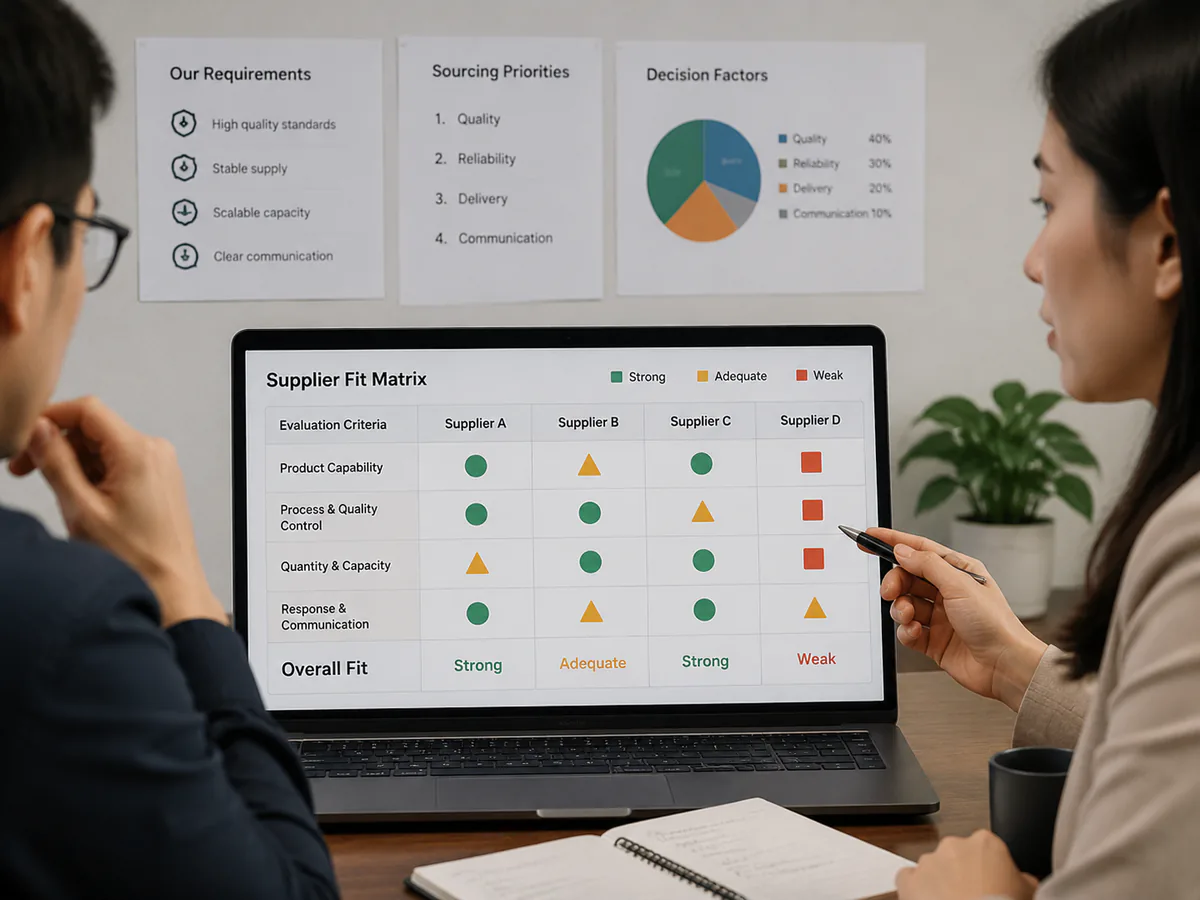
A supplier lead is not a supplier fit
A supplier page can look exactly right and still lead to the wrong conversation. Product photos may show a broad category, a copied listing or a version that differs from the product you actually need.
Before treating a supplier as relevant, check four things.
1. Product match
Has the supplier shown the same product, or only something in the same category? Compare the details that affect the quotation and the final use, such as:
- model, revision or part number;
- dimensions and capacity;
- material, construction and finish;
- included accessories or configuration;
- packaging and labelling requirements.
For a custom-manufactured component, a similar photograph is not a substitute for a drawing, sample, specification or clearly stated manufacturing basis.
2. Manufacturing fit
Ask whether the supplier actually performs the required process or sources the product from another factory. For a manufactured part, clarify the proposed process, material, equipment, tolerance capability, secondary operations and relevant production experience.
For a standard or private-label product, clarify whether the supplier is offering an existing catalogue item, a modified supplier-owned design or manufacturing to your own design. These are different commercial and technical situations.
A useful supplier response should explain what the factory can supply, not only say “we can make it.”
3. Quantity fit
A factory that normally produces 50,000 units may not be the right fit for a first order of 500 units. Ask for the assumptions behind the quotation at your actual quantity:
- MOQ and price breaks;
- sample availability and sample charges;
- tooling or setup charges;
- branding and packaging quantities;
- lead time for samples and production;
- payment and delivery terms.
The same product can have a different feasible supplier depending on the first order, forecast quantity and required delivery schedule.
4. Response quality
A useful supplier reply refers to the product, quantity and requirements in front of them. Check whether the supplier:
- answers the specific questions in your RFQ;
- identifies what is included and excluded;
- separates unit price from tooling, sample, packaging and other charges;
- states lead time, MOQ and payment or delivery assumptions;
- responds clearly to follow-up questions;
- identifies information that still needs confirmation.
Fast replies and low prices can be useful, but neither one proves supplier fit.
Build a shortlist with reasons
Do not rank suppliers only by the first price. For each candidate, record:
- why the product and application appear to match;
- whether the required process and quantity appear feasible;
- what the quotation includes and excludes;
- which statements are supplier claims;
- what remains unanswered before a sample or order.
A shortlist becomes useful when the reason for including each supplier is visible. The final supplier, sample, order and purchasing decisions remain yours.
A practical RFQ principle
Suppliers can provide more comparable answers when they receive the same product basis, quantity basis and commercial questions. If a field is unknown, record it as “to confirm” rather than filling the gap with an assumption.
This approach helps you compare relevant suppliers more fairly, but it does not guarantee the lowest price, product quality or final project outcome.
Sources
Common questions
Do you guarantee supplier quality or the lowest price?
Mon helps identify relevant suppliers, organize requirements, compare quotations and coordinate agreed sourcing stages, but does not guarantee the lowest price, supplier performance, product quality, certification, delivery or final project outcome.
What information do I need to start?
A short description and one useful reference—such as a product link, photo, model number, drawing or sample—is enough to begin the conversation. Detailed specifications, quantities, commercial requirements and confidential files can follow by email after initial contact.